

 Deutsch
 Français
 Español
Additive Manufacturing (5)Case Studies (5)Investment Casting (6)MIM (13)Technological Comparative (4)
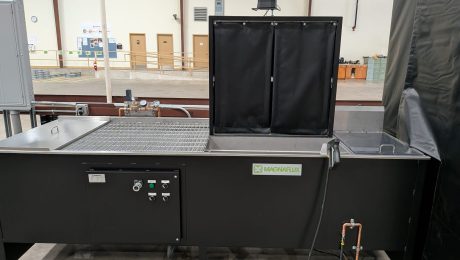
Liquid penetrant inspection, now in-house at MimecriUSA
Tuesday, 28 July 2026
This summer, MimecriUSA commissioned a new liquid penetrant inspection line at its plant in Thomasville, Georgia, strengthening the quality-control capabilities of the group’s U.S. facility. The milestone is also a story of shared know-how. In June, the U.S. team completed hands-on training at the group’s plant in Spain, and that expertise is now applied every

High-performance metal components for defense and sport shooting
Tuesday, 25 November 2025
In sectors like defense and sport shooting, precision isn’t just a performance goal. It’s a requirement. Whether for an optical system in a submarine or a rear sight on a competition-grade rifle, each metal component must deliver consistent accuracy, surface quality, and durability. At Ecrimesa Group, we design and manufacture parts that meet these standards
- Published in MIM

How simulation and prototyping improve Investment Casting component design
Tuesday, 14 October 2025
At Ecrimesa Group, simulation and prototyping are not just tools—they are essential steps in the development of new components through investment casting.
- Published in Investment Casting

Precision, reliability, and technology: our metal parts for the aerospace industry
Monday, 06 October 2025
In a sector where precision is not an option but a strict requirement, metal components must meet the highest standards of quality, reliability, and performance. At Ecrimesa Group, we have been manufacturing parts for critical industries like aerospace for over 60 years, complying with the most demanding technical requirements and international certifications. Manufacturing technologies ready
- Published in Additive Manufacturing, Investment Casting, MIM
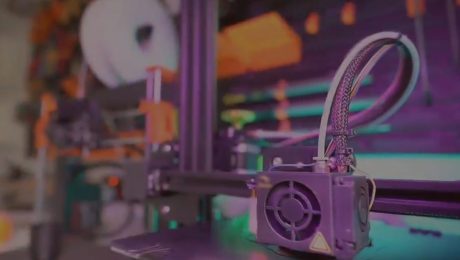
MIMECRISA boosts technological leadership with a new R&D&I project on advanced alloys supported by CDTI
Tuesday, 02 September 2025
As part of its strong commitment to industrial innovation, MIMECRISA has launched an ambitious R&D&I project in collaboration with the University of Castilla-La Mancha (UCLM), with the support of the Centre for the Development of Industrial Technology (CDTI). Officially classified as a Research and Development project, the initiative aims to position MIMECRISA at the forefront
- Published in Industry 4.0, MIM, News

Investment casting: what kind of metal parts can be manufactured?
Monday, 11 August 2025
The evolution of Investment Casting: the parts since the beginning of the company, when each technology is best applied, the basic rules and tips to keep in mind.
- Published in Investment Casting

Investment Casting: timeless technology for precicion metal parts
Thursday, 19 June 2025
Investment casting is one of the oldest metal manufacturing technologies still in use, yet it remains one of the most reliable methods for producing complex, high-precision components. With origins tracing back to 4,000 BC, it has evolved into a modern process capable of meeting the most demanding standards across aerospace, automotive, medical, and defense sectors.
- Published in Investment Casting, Productive Processes

Applications of investment casting
Thursday, 29 May 2025
Although investment casting is a well-established industrial technology, its potential continues to expand, particularly in producing larger, more complex, and high-performance metal components. In recent years, the process has evolved considerably thanks to advances in materials, simulation tools, and manufacturing equipment. Balancing volume, quality, and complexity Today’s market reflects a dual trend in investment casting.
- Published in Case Studies, Investment Casting

Investment casting and MIM in the medical industry
Friday, 02 May 2025
We introduce you to Investment Casting and MIM as the techologies we apply within the Medical Industry.
- Published in Investment Casting, MIM
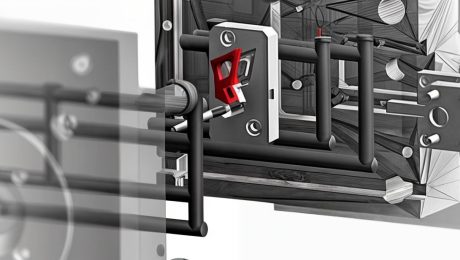
SIGMASOFT: Advanced simulation to optimize MIM project development
Wednesday, 09 April 2025
At Ecrimesa Group, innovation is a key pillar to ensure maximum precision and cost-effectiveness across our processes. For over 15 years, we have integrated simulation tools into our manufacturing technologies, allowing us to improve production efficiency and deliver more effective solutions to our customers. As part of this ongoing improvement strategy, we implemented SIGMASOFT at
- Published in MIM

Metal Injection Molding: its Materials and Utilities
Wednesday, 20 September 2023
Summary of the different properties of the MIM and its various utilities in Ecrimesa.
- Published in MIM

Conversion to MIM of die-cast door hinge manufacturing
Tuesday, 17 January 2023
The last December number of PIM International magazine, includes a Case Study prepared by our technical director, Manuel Caballero. In the article, Manuel Caballero reviews a conversion process in which a die-cast zinc hinge set is redesigned for production with MIM in 316L stainless steel, improving significantly mechanical properties. Die casting is a widely used
- Published in Case Studies

Case Study: Using BASF’s Catamold® for automotive parts manufacturing
Monday, 25 July 2022
Case study and analysis of the use of BASF’s Catamold(r) for the manufacture of automotive parts, particularly with MIM.
- Published in Case Studies

The Defense Sector in relation to Metal Injection Molding
Tuesday, 12 July 2022
New Blog about the growing importance of the Defense Sector for the use of metal injection molding and Investment Casting.
- Published in MIM

Metal injection molding outlook for 2022 in Europe
Friday, 28 January 2022
Details of the metal injection molding process, and technology outlook for 2022 in Europe.
- Published in MIM

Design rules for the manufacture of parts by injection molding of metals
Monday, 06 December 2021
Ecrimesa advises you with important details for the creation of your project for the production of metal parts by metal injection molding.
- Published in MIM, Uncategorized

What is the best technology for manufacturing metal parts?
Thursday, 25 November 2021
Accurate comparison of the different industrial steel treatment technologies.
- Published in Technological Comparative

Metal Injection Molding: advantages and disadvantages
Tuesday, 28 September 2021
The comparison between MIM and other technologies in this blog, allows us to better understand why this method is so much in demand in the market.
- Published in MIM, Technological Comparative

Cost of a MIM piece
Friday, 17 September 2021
All the important details you need to consider to calculate the cost of a MIM part.
- Published in MIM

COMPARATIVE ANALYSIS of MIM vs FDM vs BINDER JETTING
Tuesday, 27 July 2021
Comparative analysis of metal parts manufacturing technologies: MIM / FDM / Binder Jetting
- Published in Additive Manufacturing, Technological Comparative

Case Study: Desktop Metal Studio System
Thursday, 22 July 2021
Downloadable case study about the Desktop Metal Studio System and the advantages of its application in the steel fabrication industry.
- Published in Additive Manufacturing, Case Studies

MIM vs Investment Casting
Monday, 19 July 2021
Comparative analysis of technologies suitable for the manufacture of metal parts (MIM vs. Investment Casting)
- Published in Technological Comparative

Case studies of additive manufacturing with metals
Thursday, 08 July 2021
Additive manufacturing comparison: studio system desktop metal, conventional filament and binder jetting printers.
- Published in Additive Manufacturing, Case Studies

The characteristics of additive manufacturing and how to use it in the fabrication of metal pieces
Tuesday, 15 June 2021
What is additive manufacturing? Additive manufacturing, also known as 3D printing or rapid prototyping, is the fabrication of metal parts by using a 3D model and applying several layers of material to it. Fabricating metal parts through additive manufacturing has become one of the most interesting technologies of the sector throughout the last decade –
- Published in Additive Manufacturing

How to use MIM in the production of metal parts
Monday, 07 June 2021
Metal Injection Moulding (MIM) is a suitable technology to fabricate small or medium-sized pieces with complex geometry. A variety of materials can be used (stainless steels, low-alloy steels, soft magnetic, tooling steel or ceramic materials). MIM combines the technique and versatility of plastic injection with sintering in order to fabricate metal pieces with high density
- Published in MIM, Productive Processes


© 2021 Ecrimesa. All rights reserved. Legal policies · Privacy policies · Cookies policy · Made with  by saKudarte